Iron sulfide, sometimes containing small amounts of cobalt, nickel, silver, and gold
Color
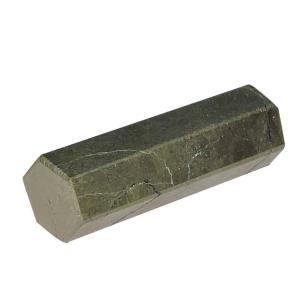
Yellowish gray to gray. Some specimens oxidize and form a yellow-brown or iridescent film on exposedcrystal faces.
Streak
Black with a slightly green tinge
Hardness
6 - 6.5
Crystal System
Isometric
Crystal Forms
and Aggregates
Pyrite can form in extremely well-crystallized examples of cubes, pyritohedrons, and octahedrons. Combinations of these forms also occur. An icosahedron formed from a combination of an octahedron and pyritohedron is also known. Pyrite crystals frequently form penetration twinning, especially in thecubic form. Cubes are sometimes elongated in rectangular form. Also occurs massive, radiating, grainy,flaky, drusy, mammilary, encrusting, nodular, tuberose, fibrous, in concretions, and as groups of small crystals. Pyrite crystals are frequently striated.
Transparency
Opaque
Specific Gravity
4.9 - 5.2
Luster
Metallic
Cleavage
None
Fracture
Conchoidal
Tenacity
Brittle
Other ID Marks
Some specimens develop a yellow-brown film on crystal faces.
In Group
Sulfides; Simple Sulfides
Striking Features
Hardness, color, well shaped crystals, heaviness, and streak